Empowering Your Path Towards Wellness
Empowering Neurodiverse Children Through Compassionate, Play-Based Therapy.
About
At FRIENDS ABA, we believe every child is full of potential—and deserves to be seen, heard, and supported. We offer a warm, caring and engaging environment where children with diverse developmental needs can grow through personalized, play-based ABA therapy rooted in respect, connection, and joy. We honor neurodiversity by embracing each child’s unique way of thinking, learning, and interacting with the world. Our approach is not about changing who a child is—it’s about helping them thrive on their terms, while fostering confidence, communication, and connection.
Our Mission
At FRIENDS ABA, our mission is to help children and adolescents with Autism Spectrum Disorder (ASD) and other developmental and behavioral challenges build the skills they need to learn, grow, and thrive.We provide individualized, evidence-based Applied Behavior Analysis (ABA) services designed around each child’s unique strengths, needs, and goals. Through compassionate care, caregiver training, education, and ongoing collaboration, we work alongside families to create meaningful and lasting progress.Our goal extends beyond therapy. We strive to help children develop greater independence, communication, social skills, confidence, and everyday living skills so they can participate more fully at home, in school, and within their communities.At FRIENDS ABA, we believe every child has the potential to grow. We are committed to creating a supportive, respectful, and encouraging environment where children and families feel valued, empowered, and supported every step of the way.
Our Approach
At FRIENDS ABA, we use assent-based practices, meaning we prioritize the child’s voice and comfort throughout every step of therapy. We believe therapy should be a collaborative experience—not something done to a child, but with them.
We focus on supporting children across eight areas of development:
- Language & Communication
- Social Interaction & Play
- Cognition & Executive Functioning
- Motor & Adaptive Skills
- Academic Readiness
- Emotional Regulation
- Positive Behavior Support
- Daily Living Skills
Who We Serve
FRIENDS ABA is here for children of all ages who may be navigating:
- Autism Spectrum Disorder (ASD)
- ADHD
- Language & developmental delays
- Behavioral or social-emotional challenges
- And more...
More Than Therapy — We’re Family
When you join FRIENDS ABA, you’re not just accessing quality care—you’re joining a community that celebrates your child for exactly who they are. We partner with families every step of the way to ensure support is not only effective, but compassionate and consistent.
Let’s grow, play, and thrive—together.
Services
Services at FRIENDS
At FRIENDS ABA, we specialize in Applied Behavior Analysis (ABA) therapy for young children in a supportive, play-based, and developmentally appropriate environment. Our team is dedicated to child-centered care, focusing on each child’s interests, strengths, and natural pace of learning. ✨ What We Offer: Individualized Assessments conducted at our FRIENDS ABA center Customized ABA Therapy tailored to your child’s unique strengths and goals Services provided in-home, at school, and at our center We celebrate each child’s individuality and create engaging, play-based and structured sessions designed to build confidence, enhance communication, and support meaningful life skills.
Program Overview
Motor Skills
Visual, oral-motor, and motor skills are essential for children to communicate effectively, engage in play, perform daily living activities independently, and successfully participate in academic tasks.
Social Skills and Relationship Building
Supporting individuals in developing positive social interactions, building meaningful relationships, improving social communication skills, and strengthening self-confidence and self-esteem.
Language and Communication
Developing effective communication skills to help individuals express their needs, wants, thoughts, and emotions while improving their ability to understand and respond to others.
Adaptive Skills
Ability to engage in daily living activities independently, from dressing and toileting to setting the table and shopping for groceries
Play
Various forms of play, including interactive, independent, pretend, and computer play.
Executive Function
Goal-oriented behavior and self-management, such as memory, attention, planning, self-awareness, flexibility, and problem solving
Cognition
Perspective-taking skills or “Theory of Mind” (i.e., the ability to understand the mental states of oneself and others)
Academic
Language Arts and Math skills, so a child can independently participate in assignments at school
ABA Intervention
Social Skills Support
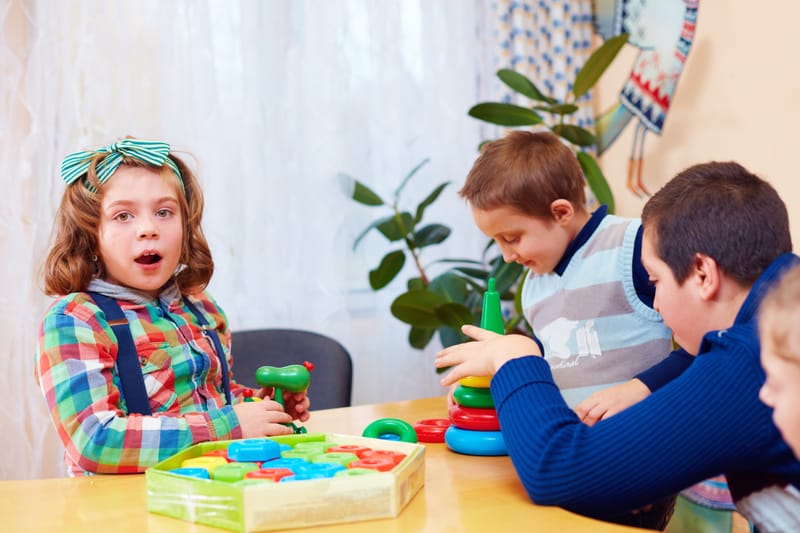
FRIENDS ABA provides social skills support to children with autism spectrum disorder and other developmental disabilities. The program focuses on improving each child’s ability to: Recognize and interpret verbal and non-verbal communication. Develop and maintain appropriate peer relationships. Improve social interactions by expanding interests in age-appropriate topics, toys, and activities. Develop appropriate play skills, including interactive, independent, pretend, and computer-based play. Increase participation in socially appropriate activities and interactions with peers, caregivers, and others.
Behavior Intervention Plans
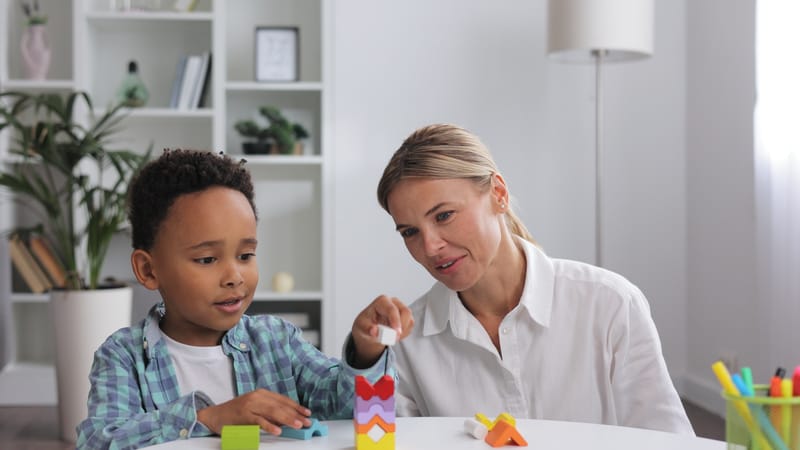
Behavior Intervention Plans (BIPs) are developed based on information obtained through a Functional Behavior Assessment (FBA). BIPs are individualized strategies designed to increase the acquisition and use of appropriate alternative skills, reduce the occurrence of challenging or problem behaviors, and promote meaningful improvements in the individual’s overall quality of life. The goal of a BIP is to support the individual in developing functional, socially appropriate behaviors while providing caregivers, family members, and support team members with consistent strategies to promote skill development, independence, and successful participation across environments.
Verbal Behavior Therapy
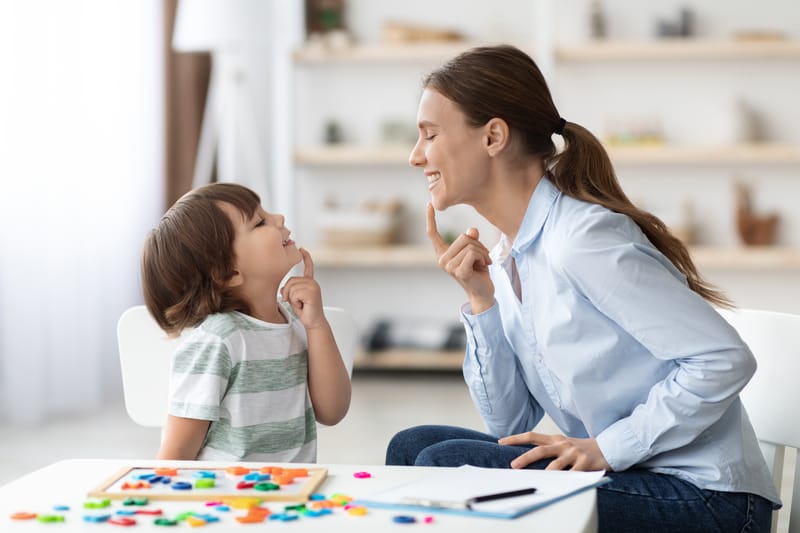
Verbal Behavior Therapy (VBT) teaches communication and language skills using the principles of Applied Behavior Analysis (ABA) and concepts derived from the work of behaviorist B.F. Skinner. The approach focuses on understanding the function of language—specifically, why we communicate and how words are used to achieve different purposes. Verbal Behavior Therapy emphasizes the development of functional communication across four primary verbal operants: Mand: Communication used to request items, activities, information, or assistance. Tact: Communication used to label, describe, or identify objects, actions, events, or experiences. Intraverbal: Responding to the language of others, such as answering questions, completing statements, or engaging in conversation. Echoic: Repeating or imitating sounds, words, or phrases spoken by another person. The goal of VBT is to increase functional and meaningful communication while helping individuals use language effectively across people, settings, and everyday situations.
Insurances Accepted

Contact
- 1617 Ridgewood Avenue, Holly Hill, FL, USA
- Suite E. 202
- +1-(386) 610-1717
- (386) 610-1707
- Admin@friendaba.com
- Mon-Fri - 09:00AM-05:00PM